

Latest news, alerts, and events.
Latest news, alerts, and events.
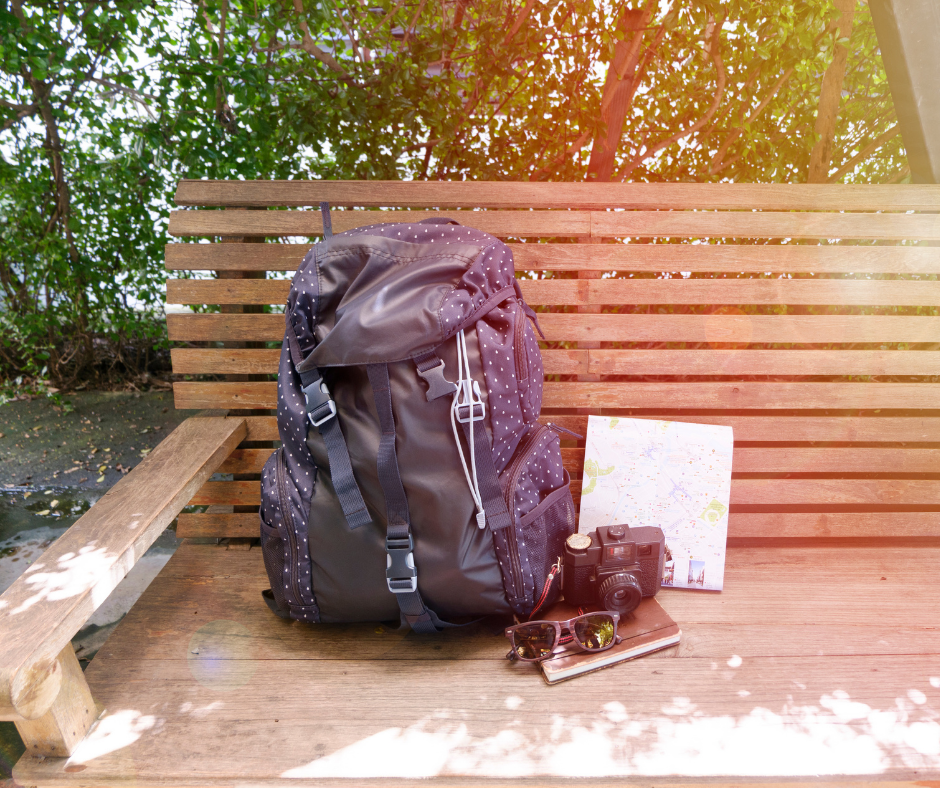
It is back-to-school time – that ritual of getting ready and gathering the things kids need for success. But what about you? What do you need in your backpack to succeed right now as a leader in your work?
Unfortunately, a well-organized teacher is likely not handing you a list of those things, nor are all the items that we need available at the store. Still, let’s look at seven essential items that may help you be ready for what comes next in your role.
First, let’s just consider your backpack. In this case, it is a state of mind, but it could also be literally the bag you take with you to work. For those in the state-of-mind category, I think of a backpack as the things I carry and can draw on regularly and that I know extremely well. Those items are solid tools, lessons, and stories that I can use whenever I need them. Some of the list below includes those essential items, and others are areas that might need your time and attention to master.
For those of you with a physical backpack, that matters too because, again, you have to get used to carrying some of these things until they become second nature. So, is your backpack really a recycled grocery bag? Or a designer clutch or a true backpack designed for the elements? Or is it something super fun with sparkles? Maybe the bag has lots of pockets and reflects your peak organizational skills, or it is a jumble of all the things that make sense to you, or maybe it is something in between. The vessel is all you, and it matters. How you carry your tools (physically or psychologically) is part of setting yourself up for success. Having your tools ready when you need them means less energy searching for support and more energy using that support to move your mission forward. Take a moment. Maybe this is a place to start. Change the vessel or embrace the one you have.
Now, assuming that each of you will organize yourself in different ways, you may find that one of these essential items takes up more space or less and, again, some will have to be learned while others are already second nature.
There is a proven progression from data to information to knowledge to action that helps us understand that data for data’s sake, or information and knowledge that does not lead to action is likely not as helpful as it might appear. To be clear, action is not necessarily taking a tangible step, it could be a shift in mindset. Sadly, nonprofits suffer from two extremes. Either we get inundated with a blizzard of data that supplies very little information, and then no action follows, or we are in a data desert with only our instincts to tell us what is happening. If you have been around a minute, you have probably learned that the blizzard of data can look like a company using it to sell you something or to confirm why their product matters. Or we do it to ourselves when we hand our boards or staff mountains of data with little context for understanding how to read it or what to do with it. Getting out of the blizzard means looking carefully at sample size and data sources and considering what specific data your team needs to act and leaving out the rest. There is plenty written about how leadership is knowing what data matters and being able to tell the difference between fact and fiction. Jim Collins calls it “confronting the brutal facts.” At Foraker, we call it “telling all the truth.” With so much division and hostility all around us and so much spin and AI-engineered “truth,” it is getting harder and harder to tell facts from fiction. Slowing down and considering what few pieces of data you can measure over time to plot your course to a long-term or big goal will matter more than all the micro data points you can muster. This is a skill of quality, not quantity. Make room in your backpack for a few key proxy measures that mean something to you and your team – then toss out all the hoopla and clickbait research like a leftover lunch that seemed good at the time but now is clearly a distraction.
There are so many good models of decision-making. No surprise that my favorite is our Foraker Nonprofit Sustainability Model that helps you and your team know the difference between a good idea and a not so good idea in real time. I also love the Mission-Money Matrix decision tool or the risk assessment tool or a good financial scenario planning tool. So many options are out there. But what’s essential is that you have a “go to” tool that you and your team trust – a tool or way of making decisions that is largely understood by the team and that is imbued with your organization’s cultural values and context. The gift of a good tool is that your organization can center itself on it. Rather than stripping out your cultural values and ways of being – it works because they are in it. The essence of this item in your backpack is its consistency of use, which creates responsibility and accountability for the fidelity of the results and yields more trust among the team. And above all, your willingness is established to use it when things are hard, not just when you know the results will be good.
Over and over in hard times, the groups that are thriving and not just surviving and the leaders who are taking them to that success all have something in common. Great support. Support comes from many places and in many forms. It starts with knowing that all missions are greater than any institution, so collaboration and partnerships all along the continuum are part of this support network. As individuals, support can also take many forms. Cohorts of learners, individualized mentoring, coaching or advising, and sometimes a combination of those ways of showing up. Ronald Heifetz and Marty Linsky, in their book Leadership on the Line, also remind us that in difficult times it is essential to have two specific kinds of support. Allies and Confidants. In the nonprofit world, your allies are often the board and staff, and sometimes your donors and volunteers. Confidants, however, are none of those people. A confidant instead has no other allegiance to your work outcomes and instead is singularly focused on providing safe space for your thinking. Some of us might call this person a best friend, while others may seek this person out as a paid professional like a coach. Whichever it is for you, this type of support is essential to navigate successfully through the good and hard times. For obvious reasons, just have the phone number, or email, or coffee date in your backpack, not the person.
With so much in our ears all the time from news to podcasts to music and more, it is easy to lose our ability to just be quiet in our own minds and think our own thoughts. The temptation, perhaps, is that someone else has the answers we are seeking, but likely you have them yourself if given enough quiet space to conjure them and hold on to them without disruption. Maybe what goes in your backpack is a scheduled regular date with yourself or a timer or a watch reminder that pings you to step away from the noise and breathe in your own thoughts and ideas. It might also require a notepad or note app on your phone or a voice recorder to capture all those amazing ideas. This might be hard at first and may need some of that support we just talked about. But over time, five minutes can be an hour and then many hours over a month and then as much as you need to hear you.
In challenging times, some voices get louder, some get clearer, and some get quieter with fear. Using your voice to stand for your mission is the job of every nonprofit leader. And yet, plenty of obstacles are around these days to doing just that. Fear and retribution feel palpable and often confirmed right now. It is easy to go quiet or to get so loud that people stop listening. Neither is helpful as a source of strength for you or your mission. For some of you, you need to pack an extra dose of courage and clarity to show why your voice matters. For others, you and your team could carry more tools to focus on the impact of your words, such as a public policy screen to make sure you are using your voice in ways that matter the most, or a clear communications plan that starts with your audience and ends with your tactics, not the other way around. Louder, focused, strategic – any way you do it, don’t forget to use all your resources to let your voice ring true.
Well, of course, right? How are you supposed to do all the mission things and keep yourself healthy and upright if you don’t drink water and have a snack? Our kids know this, but somehow as adults we conveniently forget and just plow forward until we pay big prices with our stress, burnout, and agitation. Take a moment each morning and run through your day. Consider when you can take a water or snack break. Need to schedule it? Okay. Need someone to help? Okay. Need to make a goal out of it? Sure, do that. Our kids do all these things. Let’s do it too – in your backpack place one favorite water bottle (mission logo wear is great or a prized sticker or two) and a snack – one that makes you smile and feel good at the same time gets extra points.
Speaking of burnout and stress, let’s not forget that every day we can have some joy when we are all privileged enough to work within missions that matter to us. This is not to say that days are not hard – they are. This is not to underestimate the toll it takes – that is real. Yet, to take a moment to remember why you do this work and to revel in it for even a moment is worth it. The result? Maybe joy comes from seeing mission in action or the next generation carry on the work or a wonderful colleague making a difference or an amazing donation in the mail or a kind volunteer who just showed up in a great way or a board doing all the things or a great peer inspiring exchange. Or maybe it is a happy email success story or, or, or… So much good happens every day – even among the hard, sad, challenging, and unfun stuff. The routine to hang on to is to share it with someone. To say it out loud. To celebrate it. Maybe it means a happy dance in the work hallway or a post on a Teams chat or a board email note of gratitude or just a casual mention at the copier. The opportunity is to see it. Maybe over time all those micro moments of joy become bedazzled jewels on your backpack, reminding you every day that it is worth it to pick it up again and keep moving forward.
Seven things can be a lot to carry, choose carefully so they feel like gifts, not burdens. The key to your selection should be a set of reliable items you can count on in hard times and in times of plenty. Rather than a flashy new fad, focus the opportunity to use what works for you, consistently over time, and ones that are adaptable to any situation. Eventually it will just naturally end up in your backpack to use whenever you need it. What else will you put in your backpack?
Walking beside you with my own backpack in hand.
Laurie